Eyelid Aesthetics
Surgical correction of heavy, tired-looking upper eyelids — performed personally by Op. Dr. Alper Aras, with thirty years of oculoplastic surgical experience. The eyelid belongs to eye medicine, and that is how we approach this operation.
Who is it for?
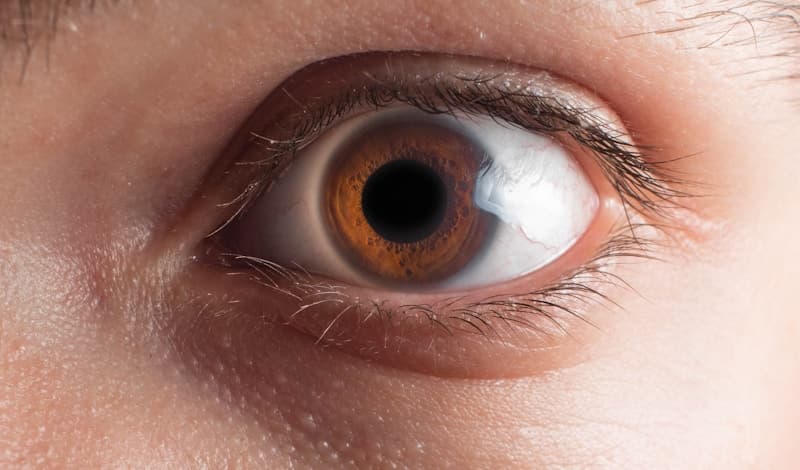
Excess skin that gathers on the upper lid with age — or genetics — gives the gaze a tired, heavy expression; in advanced cases it can sag far enough to narrow the upper field of vision. Blepharoplasty removes that excess skin, together with a measured amount of muscle and fat where needed. The goal is not a changed face but a rested gaze.
The oculoplastic difference.
The eyelid is territory measured in millimetres: the lid's function, the blink mechanism, and the health of the eye's surface matter as much as the skin removed. Op. Dr. Alper Aras is an ophthalmologist and oculoplastic surgeon — lid surgery is the core of his career, and having this operation done by a surgeon who knows the eye itself is what defines its safety.
Technique and recovery.
The incision is hidden inside the natural lid crease; once healed it is invisible with the eyes open. The operation takes 60–90 minutes under local anaesthesia, and you go home the same day. Bruising and swelling settle within one to two weeks, and the scar fades over months. Checks and photographic follow-up run over WhatsApp.
Honest caveats
Not every heavy lid is a blepharoplasty case — sometimes the real problem is brow position, and skin removed on the wrong plan pulls the brow further down. That is why the examination assesses the lid together with the brow, forehead, and the surface of the eye. Sometimes the right answer is not surgery but a different plan — and you hear that before any operation.
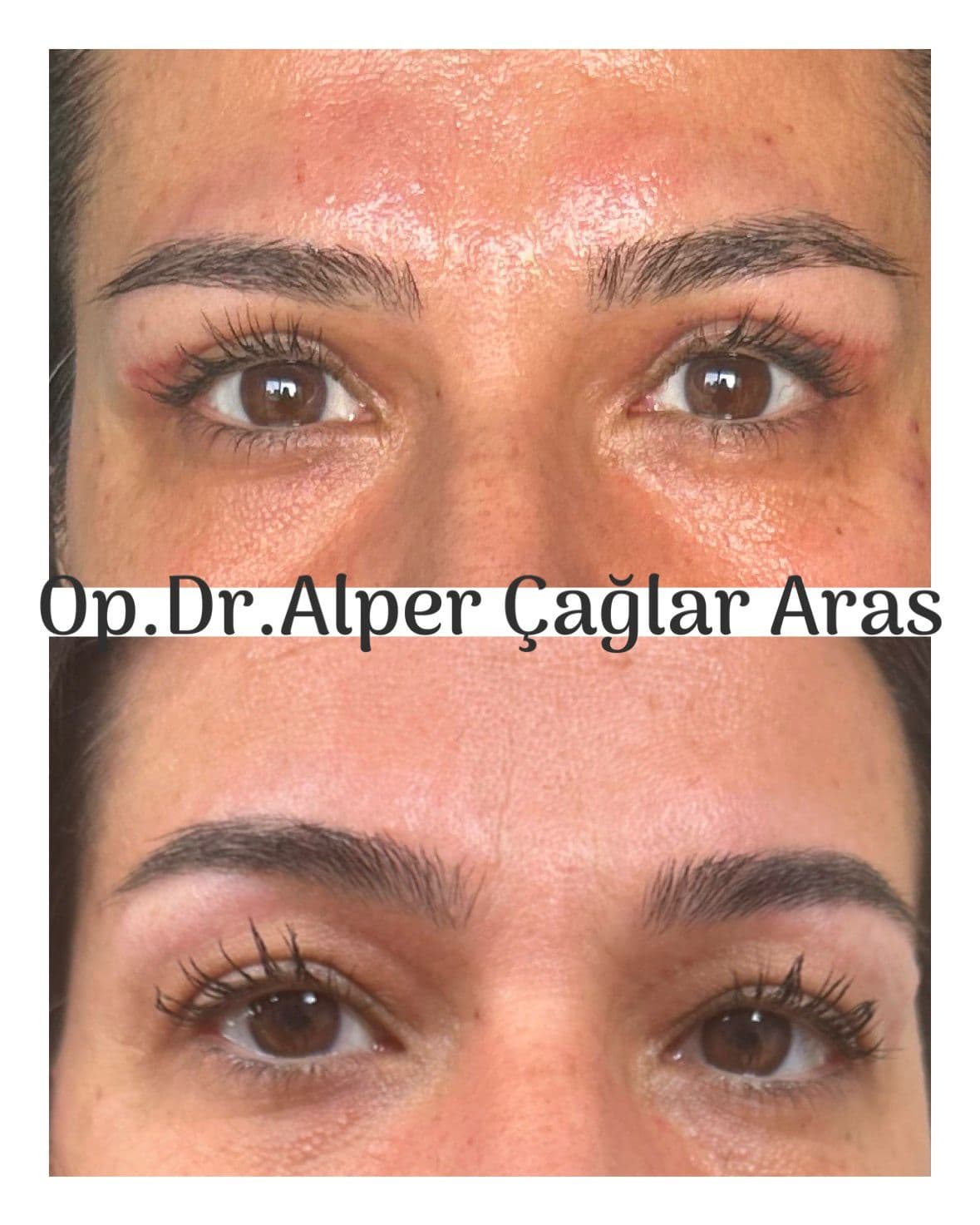
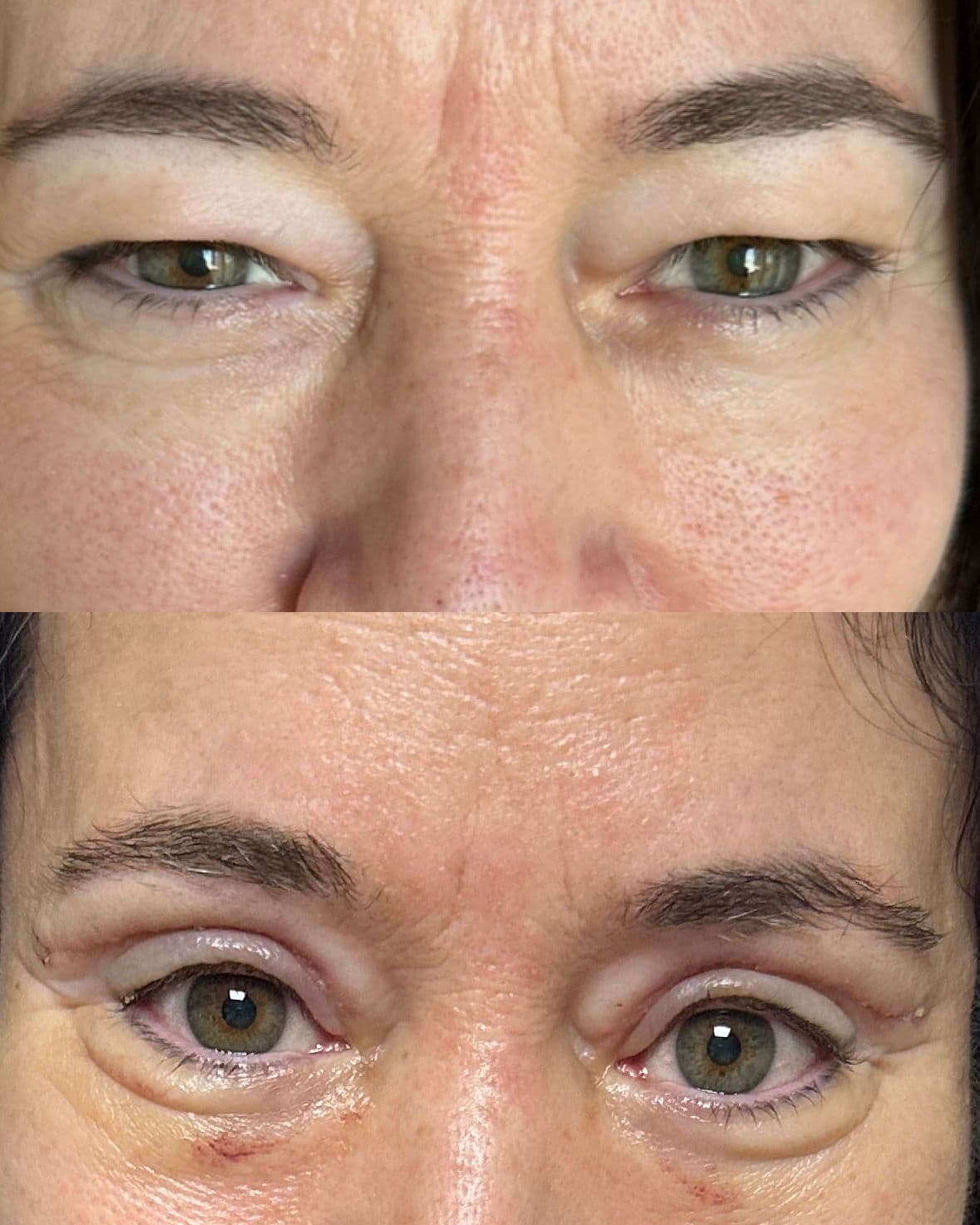
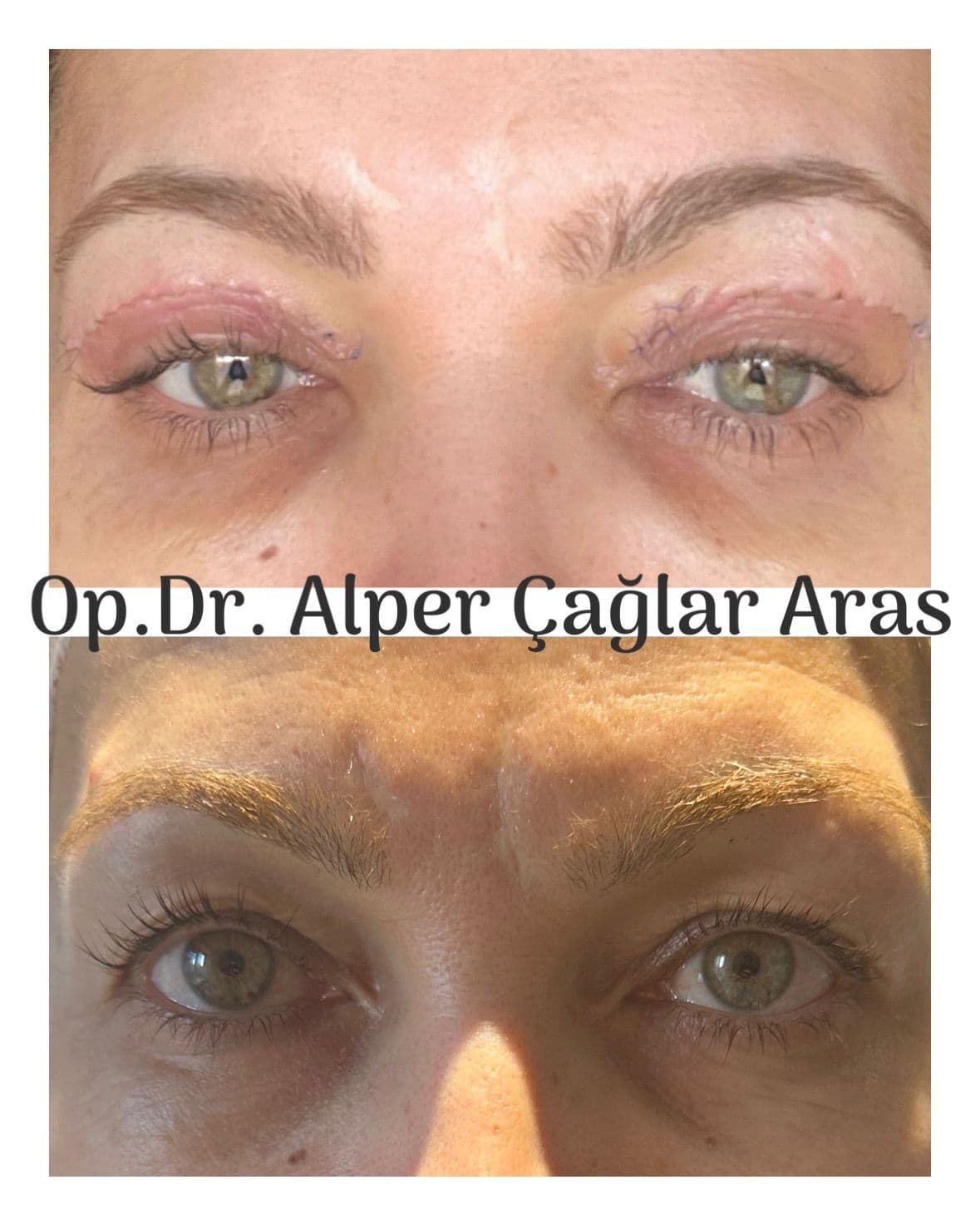
Selected outcomes
Upper blepharoplasty cases — published with patient consent. Results vary from person to person.
Frequently asked
Will the scar be visible?+
The incision is hidden inside the natural lid crease; once healing is complete it is invisible with the eyes open. The scar fades over months and stays within the fold of the lid.
Is local anaesthesia enough — does it hurt?+
Upper eyelid surgery is done comfortably under local anaesthesia; no pain is felt during the procedure, and light sedation can be added for patients who prefer it. Post-operative pain is usually minimal and settles with a simple painkiller.
How long does the result last?+
The removed excess skin does not come back, so the result holds for many years. Ageing of course continues — but for most patients a second operation in the same area is either never needed or only decades later.
When can I return to work and social life?+
Bruising and swelling are noticeable in the first week and settle substantially within one to two weeks. The stitches are dissolvable, so no separate appointment is needed to have them removed. Most patients return to desk work within a week; glasses are fine straight away, while lenses and eye makeup wait for the doctor's go-ahead.
Will the shape of my eyes change?+
The goal is not to change the shape of your eyes but to rest the gaze by removing the excess on the lid. Planning is done together with brow position and the face as a whole; an exaggerated, 'surprised' look is not this clinic's output.
Who is it not suitable for?+
For people whose real issue is brow descent, those with active ocular surface disease, and anyone whose expectations sit outside what surgery can deliver, blepharoplasty may not be the right answer. The examination assesses the lid, brow, and eye surface together — and where needed, a different plan is proposed.
Start with an examination.
Send your photos on WhatsApp; we come back with an assessment and a suitable treatment plan. Clinical questions are taken to the doctor.