Hair Transplantation
Sapphire FUE or DHI transplantation — planned by the doctor, performed with a dedicated hair surgery team, inside a fully equipped medical centre with operating theatres. One patient per day. Alongside scalp transplantation, beard and eyebrow transplants are performed with the same planning discipline.
The techniques: Sapphire FUE and DHI
Both techniques work on the same principle — follicles are extracted one by one and placed one by one. The difference is in the placement stage, and which one is used is decided by your hair, not by a package name.
Sapphire FUE
In FUE, follicles are taken one by one from the donor area with a micromotor. In Sapphire FUE, the recipient channels are opened with blades made of sapphire crystal rather than steel: because the sapphire tip is sharper and smoother, the channels are finer, trauma to surrounding tissue is lower, bleeding and crusting are reduced, and healing runs faster. The angle, direction, and depth of every channel follow the plan the doctor draws before the operation — and that channel plan is what determines how natural the result looks.
DHI
In DHI (Direct Hair Implantation), channel opening and placement merge into one step: follicles are loaded into implanter pens (Choi pens) that open the channel and place the graft at the same moment. Time outside the body is shorter for each graft, placement angle and depth are controlled with high precision, and — one of its biggest advantages — density can be added between existing hairs without shaving them.
Which one is right for you?
That decision is made from hair analysis, not from a price list: the size of the area, donor capacity, hair shaft thickness, and shaving preference are weighed together. In many cases the two techniques are combined — DHI's precision at the hairline, Sapphire FUE's efficiency at the crown. The doctor draws the plan; the technique serves the plan, not the other way round.
How the process works
If you are in Istanbul, the process runs on clinic visits; if you are travelling from another city or abroad, everything is planned to fit into four days.
Patients in Istanbul
- FirstExamination & planning
Scalp analysis is done, the hairline is drawn by the doctor, and the graft plan is set. The operation date is agreed together.
- Day 1The operation
Six to eight hours under local anaesthesia; extraction and placement are completed the same day, with PRP prepared from your own blood supporting the grafts. You go home in the evening.
- Day 3First wash — together
The first wash happens at the clinic, with our team: how to apply the foam, how long to leave the lotion, and the right water pressure are shown step by step. You leave with written instructions and a care kit for the washes at home.
- Day 10–14Crust check
Crusting should have settled; the check happens at the clinic. After that, follow-up runs at months 3, 6, and 12 with photographs — on one WhatsApp line.
Travelling from another city or abroad
- Day 1Arrival & planning
You are met at the airport. Examination, scalp analysis, and hairline design all happen the same day; the plan is confirmed together.
- Day 2The operation
Six to eight hours under local anaesthesia, with PRP support during the operation. You rest at your hotel in the evening — chosen close to the clinic.
- Day 3Check & first wash — together
The transplant area is checked and the first wash happens at the clinic, together: foam, lotion, and water-pressure technique are demonstrated, and you get written instructions for home.
- Day 4Final check & departure
A discharge check is done and you leave with a care kit and instructions. Follow-up continues for twelve months on the same WhatsApp line, with photographs.
Design first, then extraction, then placement.
The hairline and graft distribution are drawn by the doctor before operation day. Follicles are taken one by one from the donor area, then placed with sapphire blades (FUE) or implanter pens (DHI) — the choice depends on your hair, not on a package name. PRP prepared from your own blood supports the grafts during the operation.
Two weeks of patience, twelve months of growth.
Redness and crusting settle in 10–14 days. Transplanted hairs shed in the first weeks — an expected stage, not a failure. New growth starts around month three; the result is judged at twelve months, with follow-up running on one WhatsApp line throughout.
From the clinic
Our Canadian patient's operation day, and a tour of the clinic.
Honest caveats
A transplant does not stop ongoing loss — if yours is active we may ask you to stabilise it first, or tell you not yet. Density is planned against what your donor area can safely give, not against photographs of other people. If your donor area cannot support the result you want, you will hear it before you book anything.
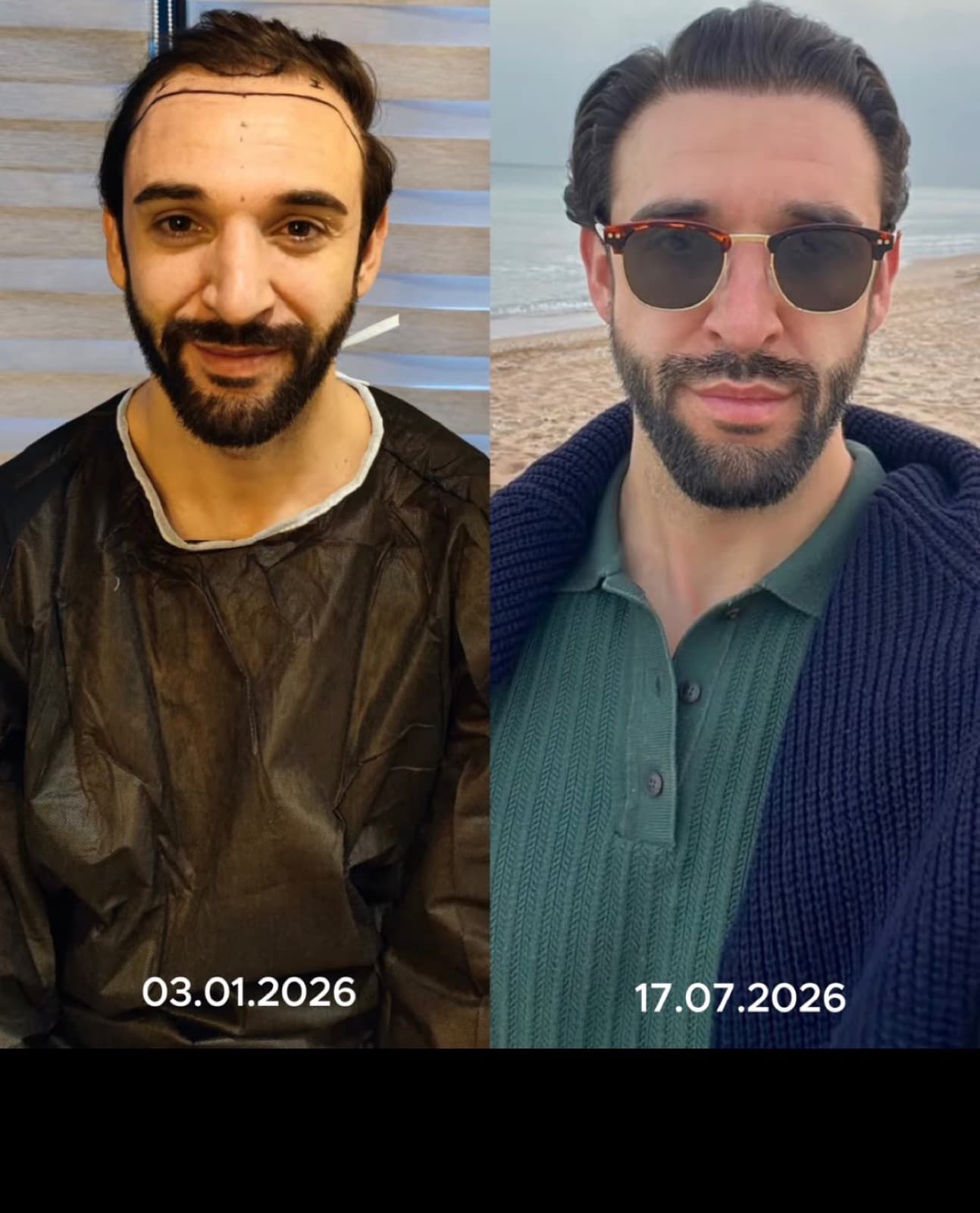
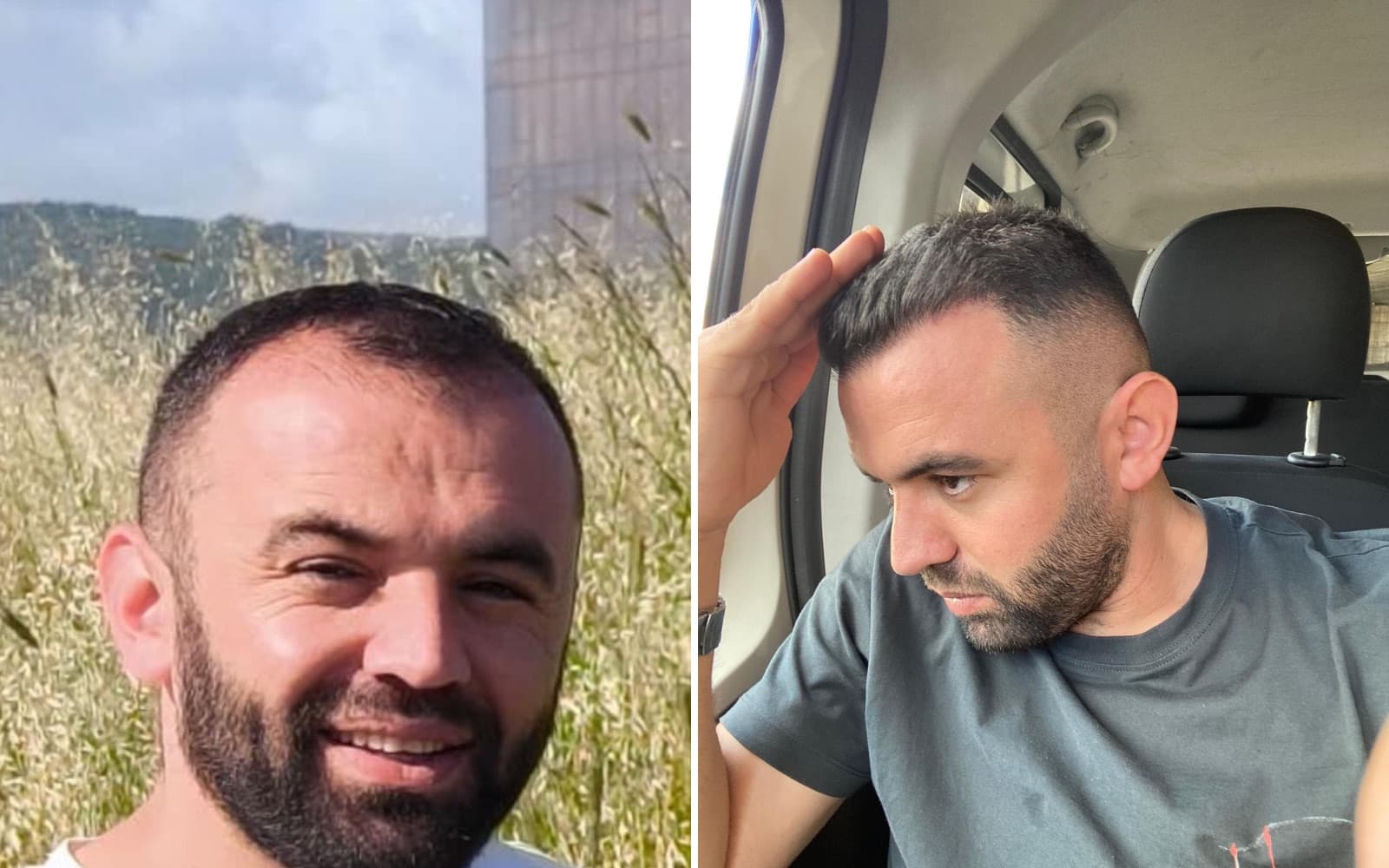
Selected outcomes
Hair transplant cases — published with patient consent. Results vary from person to person.
Frequently asked
How many grafts do I need, and how is that decided?+
Graft counts are not picked from a catalogue; they are planned by the doctor based on your donor capacity and the size of the area to cover. Photo assessment gives you an approximate range, and the exact plan is drawn at examination. Be cautious of anywhere promising more than your donor area can carry — the donor area is a finite resource.
Is the operation painful?+
The operation is performed under local anaesthesia; apart from brief discomfort while the anaesthetic is applied, no pain is felt during the procedure. A mild ache in the donor area is possible the first night and is managed with a simple painkiller.
Are the transplanted hairs permanent?+
Yes — the grafts come from the nape area, which is resistant to shedding, so they are permanent. The natural hair around them can still thin over time, which is why we ask that active loss is brought under control first; that is what determines how the transplant looks long-term.
When can I go back to normal life?+
Desk work is usually fine within 2–3 days. Redness and crusting settle in 10–14 days; sport, pools, sea, and sauna wait two weeks. Shedding of the transplanted hairs in the first weeks is normal — permanent growth starts from month three, and the result is judged at month twelve.
I'm coming from abroad — how does the process work?+
You send your photos over WhatsApp; the doctor's assessment and plan come back to you in writing. If suitable, a four-day Istanbul programme is set up: arrival and planning, the operation, a check-up with the first wash done together, and a final check before you fly. Airport transfers and accommodation near the clinic are arranged by us, and follow-up continues for 12 months on the same WhatsApp line.
Do you also do beard and eyebrow transplants?+
Yes. Beard transplants address regional gaps and scar coverage; eyebrow transplants restore thinned or misshapen brows. The technique is the same (FUE) — the difference is that angle and direction planning on the face is far more delicate, so the design is drawn by the doctor in a face-to-face examination.
Start with an examination.
Send your photos on WhatsApp; we come back with an assessment and a suitable treatment plan. Clinical questions are taken to the doctor.